The other day, the bolts that held on my license plate had
gotten rather rusty and I wanted to prevent the rust from staining the license plate
(one of my pet peeves is a dirty car). Therefore, I took a trip to Lowes and
grabbed a few stainless screws and bolts to replace the hardware so hopefully the
hardware remains aesthetically pleasing.
However, one of my curiosities was what type of stainless
steel is used in these cheap fasteners since each piece of hardware was relatively
inexpensive and the type of alloy was not specified. Also, looking at the
threads they appeared rolled so would this require subsequent heat treating to either
temper the martensite that may form from the rolling or re-solution the alloy
to achieve a homogonous microstructure? Consequently, I grabbed an extra
stainless bolt and an extra carbon steel bolt to see what I would find in a
cross section.
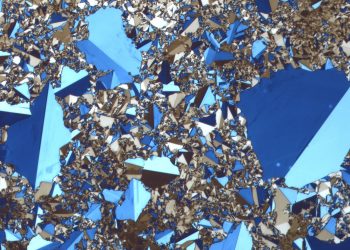
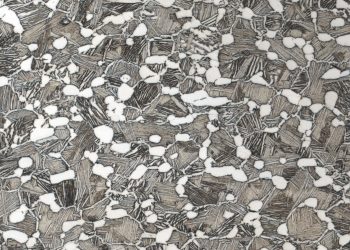
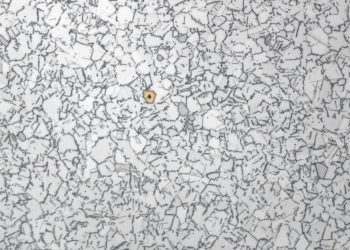
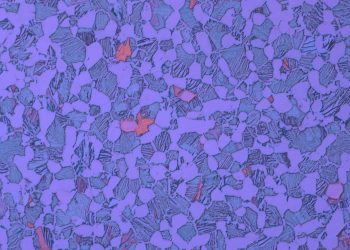
The below photomicrographs are of a sample of first the stainless-steel
bolt then a carbon steel bolt at various magnifications. The samples were
mounted longitudinally, ground, and polished to a sub-micron finish and etched
using Marbles Reagent (stainless) or Nital (steel). The stainless-steel
fastener shows a microstructure that consists of cold worked austinite and martensite
in the area immediately below the surface of the rolled thread. The steel
fastener shows a tempered martensite microstructure. However, on both samples
there are cracks that seem to be the result of the tread rolling process.
Marbles Reagent:
10 grams Copper Sulfate, 50mL Hydrochloric Acid, 50 mL Water
Nital (2%)
98 mL Ethanol, 2 mL Nitric Acid